
Our housekeeping team staged a quiet revolution.
It began when we challenged them to improve their department. Simple idea, right? But the results blew us away.
Our housekeeping manager embraced the classroom-style approach we used in orientation and ran with it. She taped a giant sheet of paper outside the laundry room, stacked a pile of Post-it notes nearby, and told the team, “If you spot a problem or have an idea, write it down.”
Within days, the wall began to fill up. Within two weeks, it resembled a crime investigation board — complete with color-coded ideas, overlapping notes, and arrows pointing to who-knows-what.
After cleaning shifts, the team gathered to sort through ideas, workshop solutions, and prepare a presentation for leadership. Yes, a presentation.
We turned it into a whole event — food, ice cream, the works. Managers attended, and the housekeepers ran the show. They stood at the front and explained their ideas with the confidence of a Silicon Valley startup team pitching to investors.
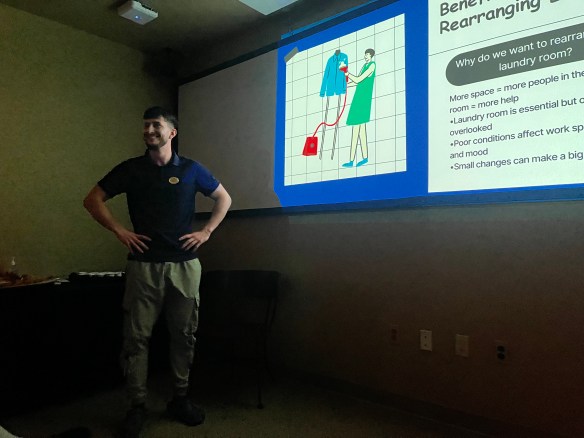


Some wins came fast. They asked for a tall table to make folding sheets easier — we found one in storage the next day. Other ideas, like new carts and shock-proof handles, went straight into the Amazon cart. They even created a color-coding system for Twin, Queen, and King linens, which eliminated the daily “what-size-is-this?” guessing game.
The result? A team that felt heard, empowered, and proud. They weren’t just cleaning rooms anymore — they were improving systems, solving problems, and leading change.
Soon, we were ranked #1 among all the lodges in housekeeping scores. (Not that we’re counting. Except we definitely were.)
The housekeeping manager learned that leadership isn’t about having all the answers — it’s about asking better questions and trusting your team to find the answers themselves. Like a good teacher who flips the classroom and lets the students teach each other. It takes courage to hand over the chalk, but when you do, the results can be extraordinary.


Key Takeaways
- Autonomy sparks innovation. Give people the freedom to think and act, and they’ll surprise you.
- Community strengthens engagement. Collaboration turns ideas into ownership.
- Trust unlocks potential. The best leaders create space — not instructions.
Your Assignment
This week, give your team ownership of one small project. Let them identify a problem, propose a solution, and present it.
Extra Credit
When have you seen someone on your team step up? Share your story in the comments — or an idea you’d like to try.


 Elementary Leadership by Jeff Bell